
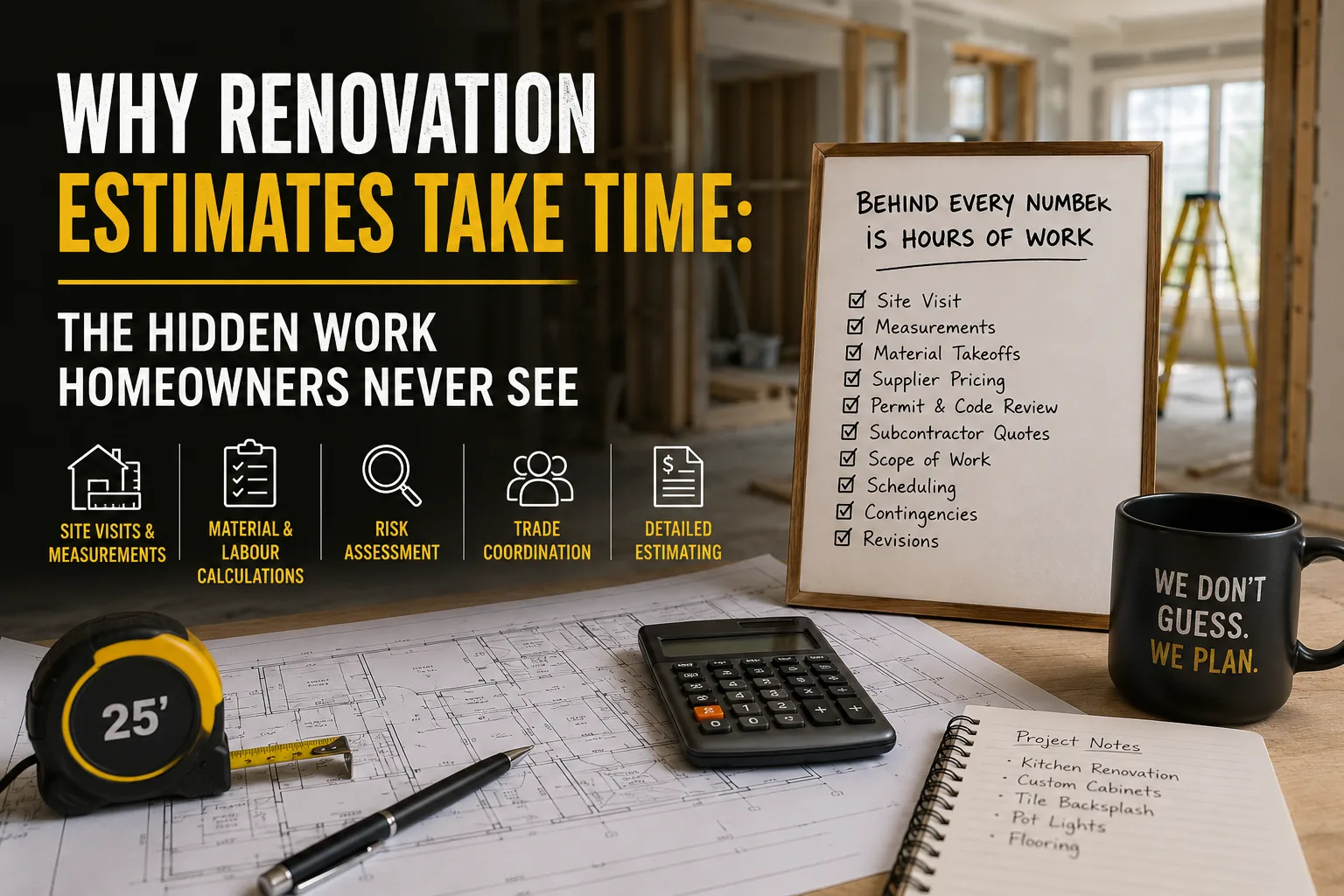
The Misunderstanding Behind Construction Estimates
Contractors often carry a frustration that clients rarely see, and most of it has nothing to do with doing the work itself. The biggest issue is often the time, knowledge, planning, and risk assessment that goes into producing an accurate estimate, and this whole process of estimating can be challenging.
From the outside, many people assume an estimate is simply measuring a room, adding numbers, and sending a price. In reality, an accurate estimate is often a project before the project even starts.
An Estimate Starts Long Before Construction Begins
Take something as simple as a bathroom renovation.
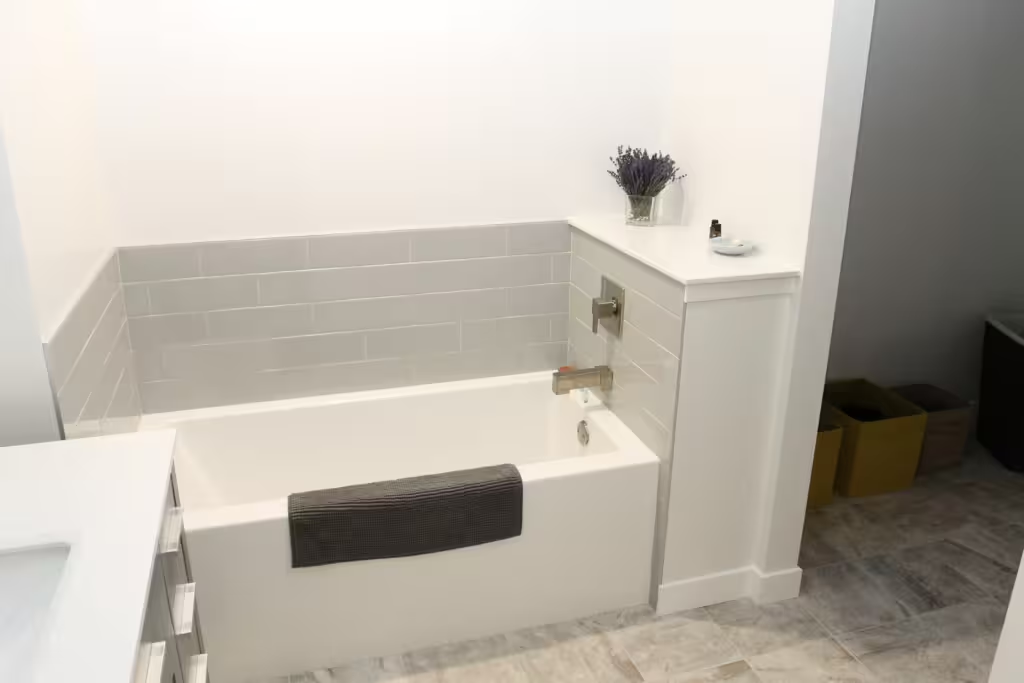
A homeowner may see:
- Shower
- Tub
- Vanity
- Tile
- Paint
A contractor sees:
- Demolition sequence
- Plumbing locations
- Venting requirements
- Waterproofing systems
- Substrate conditions
- Framing corrections
- Vapor barriers
- Electrical changes
- Tile layouts
- Material waste factors
- Permit considerations
- Trade coordination
A proper estimate often includes:
- Site visits
- Travel time
- Measurements and documentation
- Photos and project notes
- Supplier pricing
- Subcontractor quotes
- Material takeoffs
- Code reviews
- Scope writing
- Scheduling
- Revision work
Clients usually see the final PDF.
Contractors see the hours behind it.
Why Incomplete Information Makes Pricing Difficult
One of the biggest frustrations contractors face is receiving broad questions such as:
“How much for a kitchen?”
“What would a basement cost?”
“Can you redo my shower?”
The challenge is that every project is different.
A kitchen renovation might range from $30,000 to well over $200,000 depending on:
- Cabinet quality
- Layout changes
- Structural work
- Appliances
- Countertops
- Finishes
- Mechanical upgrades
A shower renovation could include:
- Steam systems
- Heated floors
- Custom glass
- Waterproofing upgrades
- Plumbing relocation
- Structural modifications
- Hidden damage repairs
Without details, contractors are often forced to spend significant time gathering information before accurate pricing is even possible.
The Problem With Comparing Estimates Only by Price
Many contractors spend hours building detailed estimates only to hear:
“Someone else was half the price.”
This is where frustration begins.
Lower prices may exclude:
- Proper waterproofing
- Permit allowances
- Quality materials
- Protection measures
- Cleanup
- Labour hours
- Project management
- Contingencies
Sometimes lower numbers are accurate.
Other times they simply miss important details.
Experienced contractors know that cheap projects can quickly become expensive repairs.
The Hidden Cost of “Free Estimates”
Many homeowners assume estimates are free.
While contractors may not charge directly, estimates still cost money.
Every estimate includes:
- Fuel
- Vehicle expenses
- Insurance
- Software subscriptions
- Office administration
- Phones and communication
- Licensing fees
- Time away from active projects
For many owner-operators, estimating happens after a full day onsite.
The workday ends.
Dinner happens.
Then the laptop opens.
Many estimates are written late at night after ten-hour construction days.
Revision Cycles Can Double the Time Investment
Estimating rarely happens once.
A project often changes several times:
Version 1.
Then:
- Tile changes
- Cabinet changes
- Layout changes
- Tub removal
- Steam additions
- Heated floors
- Wall movements
Suddenly a contractor has rebuilt the project multiple times before a contract even exists.
Most absorb those hours without charging.
The Emotional Side of Construction Pricing
Estimates are not just numbers.
Contractors understand:
Homes are personal.
Clients are investing savings.
Some are refinancing.
Others are spending lifetime investments.
No contractor wants to overcharge.
At the same time, missing details can destroy profitability.
Miss:
- Hidden rot
- Structural repairs
- Permit requirements
- Material increases
And profit disappears quickly.
What Clients Are Really Paying For
Good contractors are not only charging for labour.
They are charging for:
- Experience
- Planning
- Coordination
- Risk management
- Problem solving
- Technical knowledge
- Trade sequencing
- Years of field experience
A skilled contractor may walk into a room and notice problems before demolition starts.
That knowledge may represent decades of experience.
Accurate Estimates Are the First Stage of Construction
Clients often see a final number.
Contractors see hundreds of decisions.
The strongest renovation projects happen when both sides understand each other.
Clients understand estimates take time.
Contractors understand budgets matter.
When that respect exists, an estimate becomes more than pricing.
It becomes the roadmap for a successful renovation.
Because behind every accurate estimate is usually someone who already started building the project in their mind long before the first tool ever comes out.